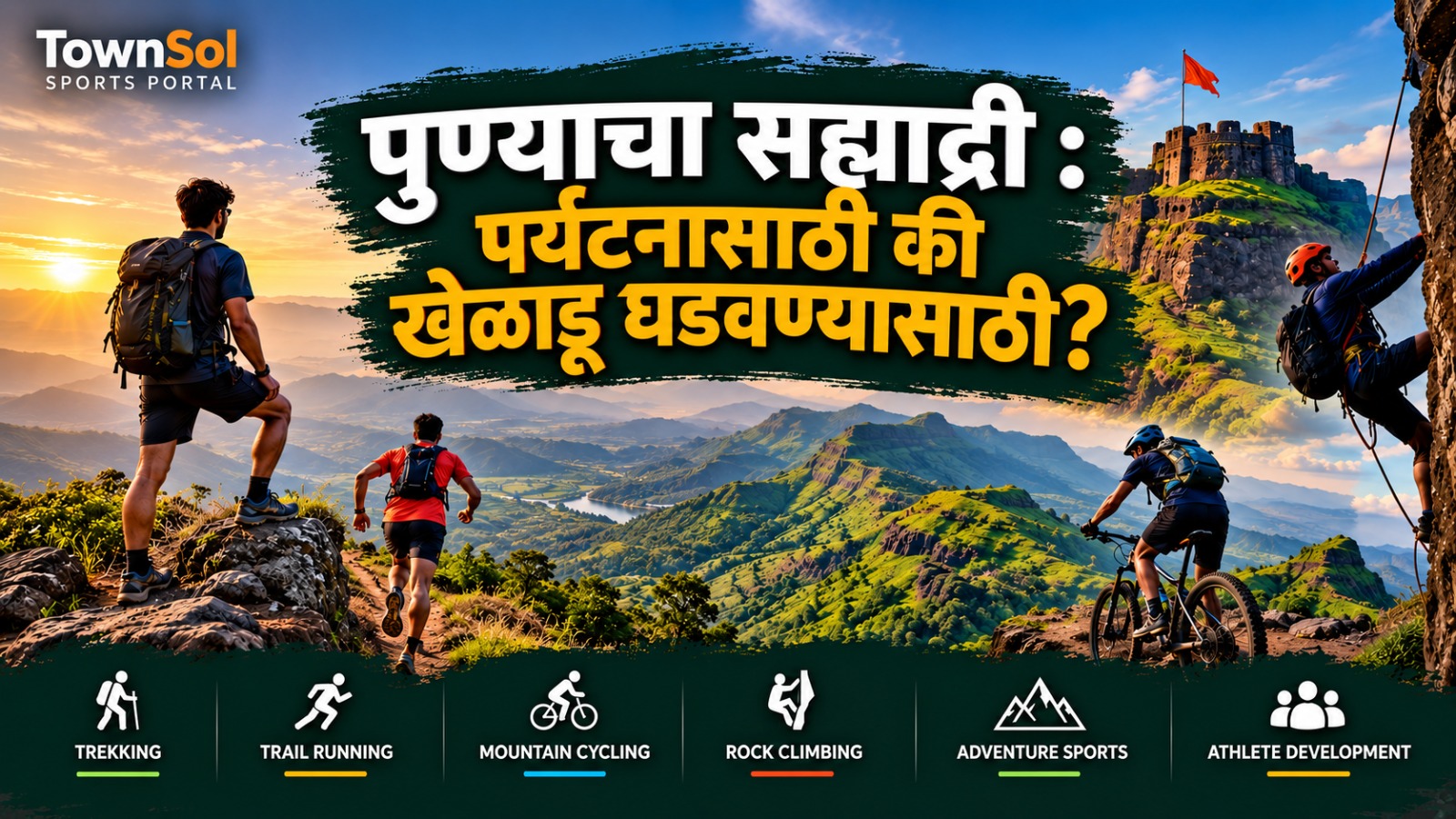
पुण्याची ओळख आपण अनेक वर्षांपासून शिक्षणाचे शहर, IT हब आणि ऐतिहासिक शहर अशी करून देत आलो आहोत. पण पुण्याची आणखी एक मोठी ओळख आपण पुरेशी पुढे आणली आहे का? पुणे जिल्हा सह्याद्रीच्या पायथ्याशी वसलेला असून त्याचा भौगोलिक विस्तार Ghatmatha, Maval आणि Desh अशा विविध प्रदेशांमध्ये विभागलेला आहे. पश्चिम घाटापासून दख्खनच्या पठारापर्यंत पसरलेली ही भौगोलिक रचना पुण्याला डोंगर, घाट, पठार, किल्ले आणि विविध प्रकारचा नैसर्गिक भूभाग देते. (Pune Government)

मग एक सरळ प्रश्न विचारायलाच हवा — इतका मोठा नैसर्गिक भूभाग आपल्या क्रीडा व्यवस्थेचा भाग का होऊ नये?

आज आपण “Sports Infrastructure” म्हटले की आपल्या डोळ्यासमोर मैदान, स्टेडियम, Indoor Hall किंवा Synthetic Track येतो. पण डोंगर हा Track असू शकतो, घाट हा Endurance Training Ground असू शकतो, किल्ल्याची चढण ही Strength आणि Stamina Training बनू शकते आणि सह्याद्री हा Adventure Sports चा नैसर्गिक क्रीडा परिसर बनू शकतो, हा विचार आपण किती गांभीर्याने केला आहे?

महाराष्ट्र पर्यटन विभाग स्वतः महाराष्ट्राच्या सह्याद्रीच्या भूप्रदेशाला trekking, rock climbing आणि rappelling सारख्या adventure activities साठी योग्य मानतो. (Maharashtra Tourism) पुणे जिल्ह्यातील तोरणा हे त्याचे ठोस उदाहरण आहे. 1,403 मीटर उंचीचा तोरणा हा पुणे जिल्ह्यातील सर्वोच्च hill fort असून तेथील चढाईमध्ये steep ascents, rocky terrain आणि narrow ridges आहेत—म्हणजेच endurance, balance आणि मानसिक ताकदीची खरी परीक्षा घेणारा नैसर्गिक भूभाग. (Maharashtra Tourism)

पण इथेच या Forum चा विद्रोही प्रश्न सुरू होतो.

आपण या डोंगरांकडे फक्त “Weekend Trek” म्हणून पाहणार आहोत की “Athlete Development” म्हणून?

सिंहगडावर हजारो लोक फिरायला जातात. तोरणा, राजगड, लोहगड, विसापूर आणि सह्याद्रीतील इतर भाग trekking साठी प्रसिद्ध आहेत. पुणे जिल्हा प्रशासनही सिंहगड आणि लोणावळा-खंडाळा यांसारख्या ठिकाणांना पर्यटन आणि नैसर्गिक वारशाच्या संदर्भात नोंदवते. (Pune Government) पण या नैसर्गिक ठिकाणांचा उपयोग नियमित Trail Running, Mountain Cycling, Adventure Racing, Climbing किंवा Endurance Training साठी संरचित पद्धतीने किती केला जातो? हा प्रश्न विचारणे गरजेचे आहे.

कारण क्रीडा म्हणजे फक्त मैदानावर खेळला जाणारा खेळ नाही. क्रीडा म्हणजे शरीराची क्षमता, मानसिक ताकद, शिस्त, endurance, risk management आणि परिस्थितीशी जुळवून घेण्याची क्षमता. या सर्व गोष्टींचे प्रशिक्षण सह्याद्री देऊ शकतो. मग पुण्याच्या विद्यार्थ्यांना या नैसर्गिक क्रीडा संपत्तीशी जोडणारी व्यवस्थित व्यवस्था का उभी करू नये?

याचा अर्थ प्रत्येक किल्ल्यावर स्टेडियम बांधणे असा अजिबात नाही. उलट निसर्ग वाचवत, सुरक्षितता राखत आणि स्थानिक पर्यावरणाचा सन्मान करत adventure sports साठी certified trails, trained coaches, rescue systems, medical support, timing systems, student competitions आणि structured training programmes तयार करता येतील का, हा प्रश्न आहे.

आणि इथेच पुण्याच्या Education Hub या ओळखीला क्रीडेशी जोडण्याची संधी आहे. पुण्यात इतक्या शैक्षणिक संस्था आहेत; मग विद्यार्थ्यांना classroom मधून सह्याद्रीपर्यंत आणि सह्याद्रीपासून sports career पर्यंत नेणारा मार्ग का तयार होऊ नये? Trekking करणारा विद्यार्थी उद्या Trail Runner होऊ शकतो, Cycling करणारा विद्यार्थी Mountain Biker होऊ शकतो आणि Adventure Sports मध्ये रस असणारा विद्यार्थी प्रशिक्षक, event manager, fitness professional किंवा adventure-sports entrepreneur होऊ शकतो.

म्हणून या Forum चा मुद्दा “पुण्यात Adventure Sports वाढवूया” एवढाच नाही. मुद्दा त्यापेक्षा मोठा आहे:

“पुण्याला खेळाडू घडवण्यासाठी नेहमी नवीन मैदानाची गरज आहे असे आपण मानतो; पण आपल्या पायाखाली असलेल्या सह्याद्रीकडे आपण कधी क्रीडा मैदान म्हणून पाहिले आहे का?”

पुण्याच्या डोंगरांवर आपण फक्त फोटो काढणार, Trek करून परत येणार आणि त्याला पर्यटन म्हणणार, की याच डोंगरांमधून Endurance Athletes, Trail Runners, Cyclists, Climbers आणि Adventure Sports Professionals घडवणार?

पुण्याचा सह्याद्री ही फक्त भौगोलिक ओळख नाही. तो क्रीडा क्षेत्रासाठी वापरता येणारा एक नैसर्गिक asset आहे. प्रश्न सह्याद्रीकडे काय आहे हा नाही; प्रश्न असा आहे की — आपण त्याच्याकडून काय घ्यायचे ठरवले आहे?

 “मैदान शोधण्यापेक्षा, आपल्या आजूबाजूला असलेल्या निसर्गाला क्रीडा मैदान म्हणून पाहण्याची दृष्टी बदलली पाहिजे.”

मुख्य संदर्भ: पुणे जिल्हा प्रशासन — भौगोलिक रचना व पर्यटन; महाराष्ट्र GSDA — सह्याद्री व दख्खन पठाराशी पुण्याचे भौगोलिक नाते; महाराष्ट्र पर्यटन विभाग — Adventure Tourism व Torna Fort. (Pune Government)
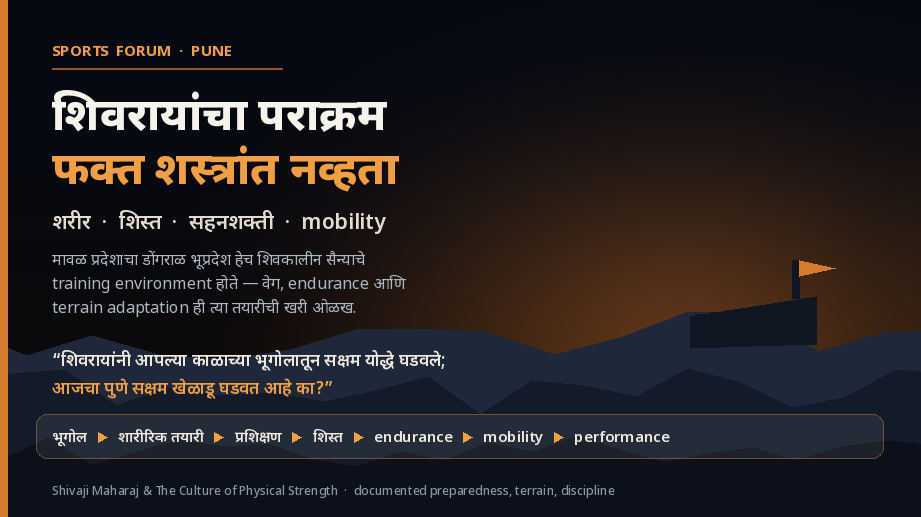
“शिवरायांचा पराक्रम फक्त शस्त्रांत नव्हता; तो शरीर, शिस्त आणि सहनशक्तीतही घडला होता का?”

छत्रपती शिवाजी महाराजांचा इतिहास आपण प्रामुख्याने स्वराज्य, किल्ले, युद्धनीती आणि प्रशासन या चौकटीत शिकतो. परंतु त्यांच्या लष्करी व्यवस्थेचा अधिक बारकाईने अभ्यास केला तर एक महत्त्वाचा घटक समोर येतो—भौगोलिक परिस्थितीशी जुळवून घेतलेली हालचाल, शिस्त, वेग, सहनशक्ती आणि सतत युद्धासाठी तयार राहण्याची क्षमता. जदुनाथ सरकार यांनी Shivaji and His Times मध्ये शिवाजींच्या इतिहासासाठी समकालीन फारसी, मराठी, इंग्रजी, डच आणि पोर्तुगीज नोंदींचा वापर केल्याचे स्पष्ट केले आहे आणि नंतरच्या आख्यायिकांपेक्षा contemporary records ला प्राधान्य दिले आहे. त्यांच्या मते पश्चिम महाराष्ट्रातील डोंगररांगा, दऱ्या आणि किल्ले हे शिवाजींच्या लष्करी व्यवस्थेच्या संदर्भात अत्यंत महत्त्वाचे होते. (Shivaji and His Times) (Wikisource)

पुण्याच्या पश्चिमेकडील मावळ प्रदेशाचा इथे विशेष विचार करावा लागतो. इतिहासकार गजानन भास्कर मेहेंदळे यांनी या प्रदेशाचे वर्णन अनेक डोंगराळ दऱ्या आणि कठीण भूप्रदेशाने बनलेल्या प्रदेशाप्रमाणे केले आहे; या भूगोलाशी परिचित असलेली स्थानिक मनुष्यबळाची रचना शिवाजींच्या प्रारंभीच्या लष्करी विस्तारात महत्त्वाची ठरली. मुंबई विद्यापीठाच्या History of the Marathas अभ्याससामग्रीतही मावळ प्रदेशातील सैनिक कठीण भौगोलिक परिस्थितीशी परिचित असल्यामुळे पायदळात मोठ्या प्रमाणावर भरती करण्यात आल्याचे नमूद आहे. त्यामुळे येथे “शरीरसामर्थ्य” म्हणजे आजच्या gymमधील strength नव्हे; डोंगराळ प्रदेशात लांब पल्ल्याची हालचाल, चढ-उतार, वेगाने स्थान बदलणे आणि युद्धाच्या परिस्थितीत शरीराची कार्यक्षमता टिकवणे असा अधिक अचूक अर्थ घ्यावा लागतो. (studylib.net)

याच ठिकाणी शिवाजी महाराजांच्या लष्करी व्यवस्थेचा सर्वात महत्त्वाचा क्रीडा-संबंध दिसतो—mobility. उपलब्ध लष्करी अभ्यासांमध्ये शिवाजींच्या सैन्याने हलका साजो-सामान, वेगवान हालचाल आणि डोंगराळ भूप्रदेशाचा रणनीतीपूर्वक वापर केला असल्याचे नमूद आहे. भारतातील लष्करी अभ्यासाच्या USI Journal मधील एका अभ्यासानुसार 1663 मधील Shaista Khan वरील धाडीसाठी निवडलेल्या दलाला प्रत्यक्ष मोहिमेपूर्वी extensive horse-riding, fighting in built-up areas आणि long approach marches यांचे प्रशिक्षण देण्यात आले होते. हा उल्लेख विशेष महत्त्वाचा आहे, कारण तो “शिवाजींच्या सैन्याकडे शारीरिक क्षमता होती” एवढे सांगत नाही, तर विशिष्ट मोहिमेसाठी विशिष्ट physical preparation केले जात होते, अशी अधिक ठोस दिशा दाखवतो. (United Service Institution of India)

म्हणूनच शिवकालीन “physical culture” समजून घेताना एक लोकप्रिय गैरसमज टाळणे आवश्यक आहे. आज आपण अनेकदा “दररोज असा व्यायाम, अशी कसरत, असा मल्लखांब किंवा अशी युद्धकला शिवरायांना शिकवली जात होती” अशा तपशीलवार कथा ऐकतो; मात्र अशा सर्व दाव्यांना समान दर्जाचा प्राथमिक पुरावा उपलब्ध नाही. उदाहरणार्थ, Sabhasad Bakhar ही 17व्या शतकाच्या अखेरीस तयार झालेली महत्त्वाची मराठी चरित्रात्मक नोंद आहे, पण नंतरच्या Chitnis Bakhar सारख्या स्रोतांची ऐतिहासिक विश्वसनीयता इतिहासकारांनी अधिक सावधपणे तपासली आहे. जदुनाथ सरकार यांनी स्वतः नंतरच्या आणि अलंकारिक आख्यायिकांऐवजी समकालीन स्रोतांना प्राधान्य देण्यावर भर दिला होता. त्यामुळे “शिवाजी महाराजांची physical culture” हा विषय इतिहासातील उपलब्ध पुराव्यांवर आधारित ठेवताना, काय documented आहे आणि काय परंपरा/लोकस्मृती आहे यातील फरक स्पष्ट ठेवणे आवश्यक आहे. (Egyankosh)

पण यामुळे हा प्रश्न कमजोर होत नाही; उलट तो अधिक गंभीर बनतो. कारण documented evidence आपल्याला हे दाखवते की लष्करी तयारी ही केवळ शस्त्र हाताळण्याची बाब नव्हती. शिस्त, हालचालीचा वेग, भूभागाचे ज्ञान, दीर्घ पल्ल्याच्या मार्चेस, घोडेस्वारी आणि सतत मोहिमांसाठी तयार राहणे यांना महत्त्व होते. शिवाजींच्या सैन्यात पायदळ आणि घोडदळासाठी स्पष्ट संघटनात्मक रचना होती; सैनिकांची निवड आणि नियंत्रण याविषयीही जदुनाथ सरकार यांच्या अभ्यासात उल्लेख आहे. त्यांच्या मते मावळ्यांचे पायदळ हे डोंगराळ युद्धासाठी विशेषतः उपयुक्त होते आणि सैन्याची mobility ही त्याच्या युद्धपद्धतीतील प्रमुख वैशिष्ट्यांपैकी एक होती. (Wikisource)

इथेच आपल्या वर्तमान क्रीडा व्यवस्थेला क्रांतिकारी प्रश्न विचारता येतो. चारशे वर्षांपूर्वीचा डोंगराळ भूप्रदेश लष्करी training environment म्हणून वापरला जात असेल, तर आज त्याच पुणे-सह्याद्रीकडे आपण किती प्रमाणात sports training environment म्हणून पाहतो? अर्थात युद्ध आणि आधुनिक क्रीडा यांची थेट तुलना करणे योग्य ठरणार नाही. पण endurance, agility, balance, speed, coordination आणि terrain adaptation ही कौशल्ये आजही athletics, trail running, cycling, climbing आणि विविध adventure sports मध्ये महत्त्वाची आहेत. त्यामुळे इतिहासाचा गौरव करण्यापेक्षा त्या इतिहासातून आजच्या क्रीडा क्षेत्रासाठी कोणते कौशल्यात्मक धडे घेता येतात, हा Forum चा केंद्रबिंदू असायला हवा.

आणखी एक मोठा मुद्दा म्हणजे शिस्त. शिवाजींच्या सैन्याबद्दलच्या उपलब्ध अभ्यासांमध्ये नियमितता, स्पष्ट command structure, शिस्त आणि लष्करी कार्यक्षमता यांचा उल्लेख आढळतो. जदुनाथ सरकार यांच्या अभ्यासात सैन्याच्या संघटनेची रचना आणि discipline यावर स्वतंत्र चर्चा आहे. म्हणजेच “physical strength” ही एकटी संकल्पना नव्हती; शरीर + शिस्त + प्रशिक्षण + संघभावना + योग्य भूभागाचा वापर यांचा एकत्रित परिणाम लष्करी क्षमतेत दिसतो. आजच्या athlete development मध्येही fitness पुरेसे नसते; training consistency, recovery, nutrition, coaching आणि competition exposure यांची सांगड आवश्यक असते. इतिहासातील संदर्भ आजच्या sports science चा पुरावा नाहीत, पण “फक्त ताकद नाही—संपूर्ण तयारी” हा विचार त्यातून नक्कीच अभ्यासता येतो. (NCCDTE)

आणि म्हणूनच हा Forum शिवाजी महाराजांची केवळ स्तुती करणारा इतिहास न राहता एक प्रश्न विचारणारा sports forum झाला पाहिजे. शिवकालीन समाजाला आधुनिक अर्थाने “sports society” म्हणणे अचूक ठरणार नाही; त्या काळातील शारीरिक तयारीचा प्रमुख संदर्भ युद्ध आणि उपजीविकेशी जोडलेला होता. परंतु त्या काळातील शरीराची तयारी, भूभागाशी जुळवून घेणे, सहनशक्ती, वेग आणि शिस्त यांचा अभ्यास आपण आजच्या क्रीडा संस्कृतीसाठी स्वतंत्रपणे करू शकतो.

 “शिवकालीन मावळा डोंगर, दऱ्या आणि कठीण भूप्रदेशाला आपल्या क्षमतेचा भाग बनवत होता; आजच्या पुण्यातील तरुणांकडे सह्याद्री आहे, मग त्या सह्याद्रीला आपण क्रीडा प्रशिक्षणाची संधी म्हणून किती पाहतो?”

आणखी खोल प्रश्न—

“शिवाजी महाराजांच्या इतिहासातून आपण फक्त पराक्रमाच्या कथा शिकणार आहोत, की त्या काळातील शिस्त, endurance, mobility आणि physical preparedness यांचा आजच्या athlete development शी काय संबंध आहे, हेही शोधणार आहोत?”

शिवाजी महाराजांच्या वारसाचा अर्थ फक्त शस्त्र उचलण्याची कथा नसावी;
तो शरीर घडवणे, शिस्त निर्माण करणे, कठीण परिस्थितीत कार्य करण्याची क्षमता विकसित करणे आणि उपलब्ध भूभागाचा कौशल्यपूर्ण वापर करणे या व्यापक दृष्टिकोनातूनही अभ्यासला गेला पाहिजे.

म्हणून या Forum ची विचारसाखळी अशी:

भूगोल → शारीरिक तयारी → प्रशिक्षण → शिस्त → endurance → mobility → performance

आणि शेवटचा प्रश्न अगदी स्पष्ट:

“शिवरायांनी आपल्या काळाच्या भूगोलातून सक्षम योद्धे घडवले; आजचा पुणे आपल्या भूगोल, संस्था आणि तरुणाईतून सक्षम खेळाडू घडवत आहे का?”

महत्त्वाची ऐतिहासिक नोंद: शिवाजी महाराजांच्या वैयक्तिक व्यायामाच्या रोजच्या पद्धतीचे किंवा “modern fitness routine” स्वरूपाचे ठोस समकालीन दस्तऐवजीकरण मर्यादित आहे. त्यामुळे या Forum मध्ये documented military preparedness, Maval terrain, mobility, training आणि discipline यांना केंद्रस्थानी ठेवणे अधिक ऐतिहासिकदृष्ट्या सुरक्षित आहे. जदुनाथ सरकार यांच्या Shivaji and His Times मध्येही समकालीन स्रोतांना नंतरच्या आख्यायिकांपेक्षा प्राधान्य देण्याची स्पष्ट भूमिका आहे. (Wikisource)

एखादा विद्यार्थी शाळेत उत्कृष्ट खेळतो, जिल्हास्तरावर पदक जिंकतो, पण त्यानंतर पुढे काय करायचे हे अनेकांना माहिती नसते.
अनेक खेळाडूंचा प्रवास माहितीच्या अभावामुळे थांबतो, गुणवत्तेच्या अभावामुळे नाही.
म्हणूनच प्रत्येक विद्यार्थी, पालक आणि प्रशिक्षकाला तालुका ते राष्ट्रीय स्तरापर्यंतची निवड प्रक्रिया समजणे अत्यंत महत्त्वाचे आहे.

निवड प्रक्रिया कशी सुरू होते?
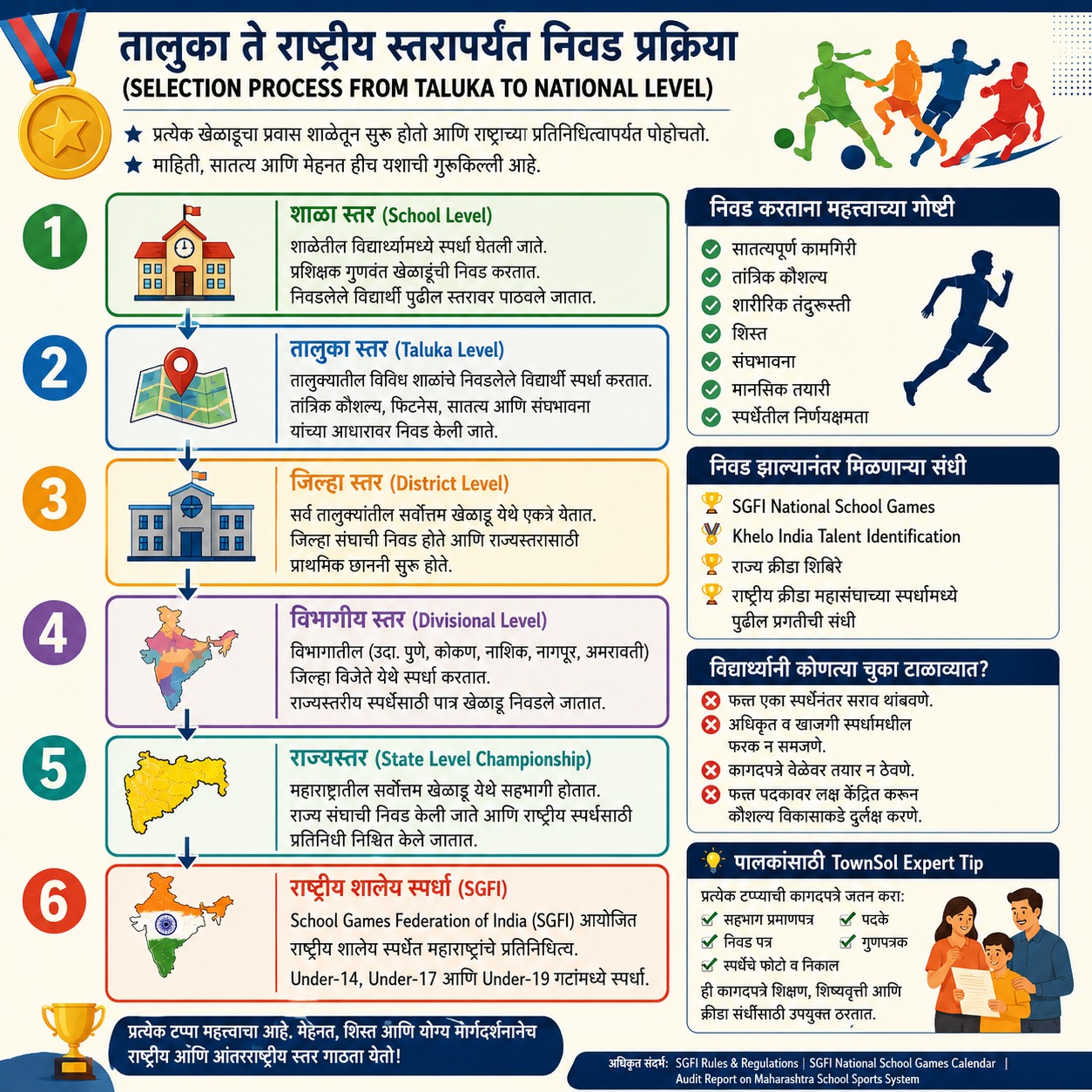
प्रत्येक अधिकृत शालेय स्पर्धेची सुरुवात शाळा स्तरावरील निवड (School Selection) पासून होते.
शाळेत चांगली कामगिरी करणाऱ्या विद्यार्थ्यांची पुढील स्तरासाठी निवड केली जाते. त्यानंतर स्पर्धा टप्प्याटप्प्याने पुढे सरकते.

महत्त्वाचे: काही जिल्ह्यांमध्ये School आणि Taluka यांच्या दरम्यान Cluster/Centre Level स्पर्धा देखील आयोजित केल्या जातात. ही रचना जिल्ह्यानुसार बदलू शकते.

अधिकृत निवड प्रक्रिया

  1. School Level (शाळा स्तर)
    हा प्रत्येक खेळाडूच्या प्रवासाचा पहिला टप्पा असतो.
    येथे काय होते?

शाळेतील विद्यार्थ्यांमध्ये स्पर्धा घेतली जाते.
प्रशिक्षक किंवा क्रीडा शिक्षक गुणवंत खेळाडूंची निवड करतात.
निवडलेले विद्यार्थी पुढील स्तरावर पाठवले जातात.

  1. Taluka Level (तालुका स्तर)

एका तालुक्यातील विविध शाळांचे निवडलेले विद्यार्थी येथे स्पर्धा करतात.
येथे काय पाहिले जाते?

तांत्रिक कौशल्य
फिटनेस
सातत्यपूर्ण कामगिरी
संघभावना (Team Sports मध्ये)

या स्तरावरून उत्कृष्ट खेळाडूंची जिल्हास्तरीय स्पर्धेसाठी निवड केली जाते.

  1. District Level (जिल्हा स्तर)

जिल्ह्यातील सर्व तालुक्यांतील सर्वोत्तम खेळाडू येथे एकत्र येतात.
हा टप्पा अत्यंत महत्त्वाचा असतो कारण:

स्पर्धेची गुणवत्ता वाढते.
जिल्हा संघाची निवड होते.
खेळाडूंची राज्यस्तरासाठी प्राथमिक छाननी सुरू होते.

  1. Divisional Level (विभागीय स्तर)

महाराष्ट्रातील विभागांतील (उदा. पुणे, कोकण, नाशिक, नागपूर, अमरावती इ.) जिल्हा विजेते येथे स्पर्धा करतात.

येथून राज्यस्तरीय स्पर्धेसाठी पात्र खेळाडू निवडले जातात.

  1. State Level Championship (राज्यस्तर)

हा महाराष्ट्रातील सर्वोच्च शालेय स्पर्धेचा टप्पा असतो.

येथे:

राज्यातील सर्वोत्तम खेळाडू सहभागी होतात.
राज्य संघाची निवड केली जाते.
राष्ट्रीय स्पर्धेसाठी प्रतिनिधी निश्चित केले जातात.

  1. National School Games (SGFI)

राज्य संघात निवड झाल्यानंतर खेळाडू School Games Federation of India (SGFI) आयोजित राष्ट्रीय शालेय स्पर्धेत महाराष्ट्राचे प्रतिनिधित्व करतो.

SGFI दरवर्षी विविध खेळांसाठी Under-14, Under-17 आणि Under-19 वयोगटात राष्ट्रीय स्पर्धा आयोजित करते.

निवड करताना कोणत्या गोष्टी महत्त्वाच्या असतात?

निवड फक्त पदकावर अवलंबून नसते. प्रशिक्षक आणि निवड समिती खालील बाबींकडेही लक्ष देतात:

सातत्यपूर्ण कामगिरी
तांत्रिक कौशल्य
शारीरिक तंदुरुस्ती
शिस्त
संघभावना
मानसिक तयारी
स्पर्धेतील निर्णयक्षमता

निवड झाल्यानंतर पुढे काय?

जर खेळाडू राज्य संघात निवडला गेला, तर त्याला पुढील संधी मिळू शकतात:

SGFI National School Games
Khelo India Talent Identification (खेळ व निकषानुसार)
राज्य क्रीडा शिबिरे
संबंधित राष्ट्रीय क्रीडा महासंघाच्या स्पर्धांमध्ये पुढील प्रगतीची संधी

ही प्रक्रिया खेळानुसार बदलू शकते.

विद्यार्थ्यांनी कोणत्या चुका टाळाव्यात?

❌ फक्त एका स्पर्धेनंतर सराव थांबवणे.

❌ अधिकृत स्पर्धा आणि खाजगी स्पर्धांमधील फरक न समजणे.

❌ जन्मतारीख, आधार, शाळेचे प्रमाणपत्र यांसारखी कागदपत्रे वेळेवर तयार न ठेवणे.

❌ फक्त पदकावर लक्ष केंद्रित करून कौशल्य विकासाकडे दुर्लक्ष करणे.

पालकांसाठी TownSol Expert Tip

अनेक पालकांना वाटते की राज्यस्तरावर पोहोचणे म्हणजे प्रवास संपला.

प्रत्यक्षात राज्यस्तर हा राष्ट्रीय आणि आंतरराष्ट्रीय प्रवासाचा प्रवेशद्वार आहे.

तुमच्या मुलाची प्रगती प्रत्येक टप्प्यावर नोंदवा:

सहभाग प्रमाणपत्र
निवड पत्र
पदके
गुणपत्रक
स्पर्धेचे फोटो व निकाल

ही सर्व कागदपत्रे पुढे शिक्षण, शिष्यवृत्ती आणि क्रीडा संधींसाठी उपयुक्त ठरू शकतात.

अधिकृत संदर्भ
School Games Federation of India (SGFI) – Rules & Regulations: निवड प्रक्रिया, पात्रता, वयोगट, राष्ट्रीय शालेय स्पर्धांचे नियम. SGFI Rules & Regulations
SGFI National School Games Calendar: विविध खेळांचे वयोगट, यजमान राज्ये आणि राष्ट्रीय स्पर्धांचे वेळापत्रक. SGFI National School Games Calendar
Audit Report on Maharashtra School Sports System: महाराष्ट्रात तालुका, जिल्हा, विभागीय आणि राज्यस्तरीय शालेय स्पर्धांमधून राष्ट्रीय संघाची निवड कशी होते याचा संदर्भ.

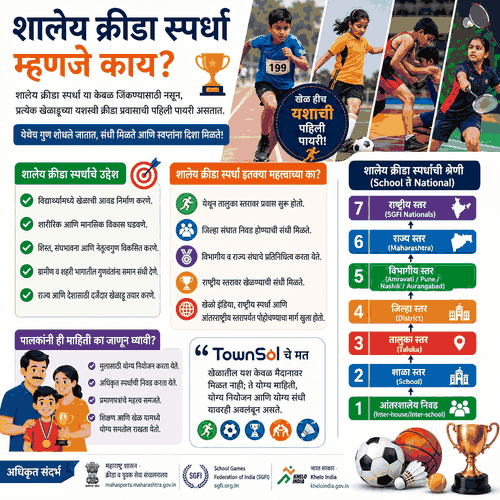
महाराष्ट्रात दरवर्षी हजारो विद्यार्थी विविध खेळांमध्ये सहभागी होतात. काही विद्यार्थी शाळेसाठी खेळतात, काही जिल्ह्याचे प्रतिनिधित्व करतात, तर काही राज्य आणि देशासाठीही खेळण्याचे स्वप्न पाहतात.

पण अनेक विद्यार्थी आणि पालकांना एक मूलभूत प्रश्न पडतो…

“खेळात करिअरची सुरुवात नेमकी कुठून होते?”

याच प्रश्नाचे उत्तर म्हणजे शालेय क्रीडा स्पर्धा.

शालेय क्रीडा स्पर्धा या केवळ जिंकण्यासाठी आयोजित केल्या जात नाहीत. त्या एखाद्या खेळाडूच्या संपूर्ण क्रीडा प्रवासाचा पहिला आणि सर्वात महत्त्वाचा टप्पा असतात. याच स्पर्धांमधून उद्याचे राज्य, राष्ट्रीय आणि आंतरराष्ट्रीय खेळाडू घडतात.

शालेय क्रीडा स्पर्धा म्हणजे काय?

शाळेत शिकणाऱ्या विद्यार्थ्यांसाठी अधिकृतपणे आयोजित केल्या जाणाऱ्या क्रीडा स्पर्धांना शालेय क्रीडा स्पर्धा (School Sports Competitions) म्हणतात.

या स्पर्धांचा मुख्य उद्देश केवळ विजेता निवडणे नसून:

विद्यार्थ्यांमधील क्रीडा कौशल्य शोधणे.
गुणवंत खेळाडूंना पुढील स्तरावर संधी देणे.
शारीरिक आणि मानसिक विकास घडवणे.
राज्य आणि राष्ट्रीय स्तरासाठी खेळाडू तयार करणे.
खेळातून शिक्षण आणि करिअरच्या संधी निर्माण करणे.

महाराष्ट्रात या स्पर्धा शालेय शिक्षण व क्रीडा विभाग, जिल्हा क्रीडा यंत्रणा आणि संबंधित क्रीडा संघटनांच्या समन्वयाने आयोजित केल्या जातात. राज्यस्तरीय विजेते पुढे School Games Federation of India (SGFI) च्या राष्ट्रीय स्पर्धांमध्ये महाराष्ट्राचे प्रतिनिधित्व करू शकतात.

शालेय क्रीडा स्पर्धा इतक्या महत्त्वाच्या का आहेत?

अनेक पालकांना वाटते की खेळ म्हणजे फक्त छंद.

पण प्रत्यक्षात शालेय क्रीडा स्पर्धाच खेळाडूच्या भविष्यातील प्रवासाचा पाया असतात.

याच स्पर्धांमधून खेळाडू:

तालुका स्तरावर पोहोचतो.
जिल्हा संघात निवडला जातो.
विभागीय आणि राज्य संघाचे प्रतिनिधित्व करतो.
राष्ट्रीय स्तरावर खेळण्याची संधी मिळवतो.
पुढे Khelo India, राष्ट्रीय स्पर्धा आणि आंतरराष्ट्रीय स्तरापर्यंत पोहोचू शकतो.

म्हणूनच, शाळेतील पहिली स्पर्धा ही एखाद्या मोठ्या स्वप्नाची पहिली पायरी असू शकते.

शालेय क्रीडा स्पर्धांचे उद्दिष्ट

या स्पर्धा आयोजित करण्यामागील काही प्रमुख उद्दिष्टे:

विद्यार्थ्यांमध्ये खेळाची आवड निर्माण करणे.
आरोग्यदायी आणि सक्रिय जीवनशैलीला प्रोत्साहन देणे.
शिस्त, संघभावना आणि नेतृत्वगुण विकसित करणे.
ग्रामीण आणि शहरी भागातील गुणवंत खेळाडूंना समान संधी देणे.
राज्य आणि देशासाठी दर्जेदार खेळाडू तयार करणे.

पालकांनी ही माहिती का जाणून घ्यावी?

आज अनेक पालक आपल्या मुलाला एखाद्या अकॅडमीत प्रवेश देतात, पण पुढे कोणत्या स्पर्धा खेळायच्या, निवड कशी होते आणि कोणत्या स्पर्धा अधिकृत आहेत याची माहिती नसते.

योग्य माहिती असल्यास पालक:

मुलासाठी योग्य नियोजन करू शकतात.
अधिकृत स्पर्धांची निवड करू शकतात.
प्रमाणपत्रांचे महत्त्व समजू शकतात.
शिक्षण आणि खेळ यामध्ये योग्य समतोल राखू शकतात.

TownSol चे मत

खेळातील यश केवळ मैदानावर मिळत नाही; ते योग्य माहिती, योग्य नियोजन आणि योग्य संधी यावरही अवलंबून असते.

म्हणूनच TownSol Sports चा उद्देश फक्त स्पर्धांच्या बातम्या देणे नाही, तर प्रत्येक विद्यार्थी, पालक आणि प्रशिक्षकाला “Sports Career Roadmap” समजावून सांगणे हा आहे.

या मालिकेच्या पुढील भागात आपण “शालेय क्रीडा स्पर्धांची संपूर्ण Hierarchy (School ते National)” सविस्तर समजून घेणार आहोत.

अधिकृत संदर्भ
महाराष्ट्र शासन – क्रीडा व युवक सेवा संचालनालय: https://mahasports.maharashtra.gov.in/
School Games Federation of India (SGFI): https://sgfi.org.in/
भारत सरकार – Khelo India: https://kheloindia.gov.in/

Kabaddi is one of the most popular traditional sports of India and has deep roots in rural culture and local communities. It is a high-energy contact sport that requires strength, speed, teamwork, quick reflexes, strategy, and mental focus. Over the years, Kabaddi has gained massive popularity across India through national and international tournaments, especially after the launch of the Pro Kabaddi League.

Kabaddi is not only a sport but also a symbol of discipline, teamwork, courage, and fitness. It helps improve physical strength, stamina, agility, balance, and decision-making skills. The sport can be played with minimal equipment, which makes it highly accessible and affordable for village and district-level communities.

One of the biggest advantages of Kabaddi is that it creates opportunities for rural youth to showcase their talent at district, state, national, and international levels. It encourages youngsters to stay physically active and away from unhealthy habits while building confidence and leadership qualities.

Despite its popularity, Kabaddi still faces several challenges in many districts. Lack of proper training facilities, limited sponsorship support, insufficient awareness about professional opportunities, and inadequate playground infrastructure often restrict the growth of talented players from rural areas. In many places, young athletes do not receive proper coaching, nutrition support, or financial assistance to continue their journey in sports.

TownSol members, let us come together and share ideas, collaborations, and suggestions to make Kabaddi a stronger and more popular sport in our hometown district.

Here are a few thoughts for community discussion:

  • Can we encourage Kabaddi training sessions in schools and colleges as part of sports and physical education activities?
  • Can we organize district-level Kabaddi tournaments to identify and promote local talent?
  • How can local businesses and organizations support Kabaddi players through sponsorships, equipment, and financial assistance?
  • Can we develop better playgrounds and practice facilities for village-level Kabaddi teams?
  • How can we encourage more girls and women to participate in Kabaddi and represent the district at higher levels?
  • Can experienced Kabaddi players and coaches mentor young athletes in rural communities?
  • How can social media and digital platforms help promote local Kabaddi talent and success stories?
  • What initiatives can help provide nutrition, fitness training, and career guidance for Kabaddi players?

Please add more thoughts and suggestions in the format of TOPIC for community discussion.

Reference:
Amateur Kabaddi Federation of India

Pro Kabaddi League

Place Holder Still pending

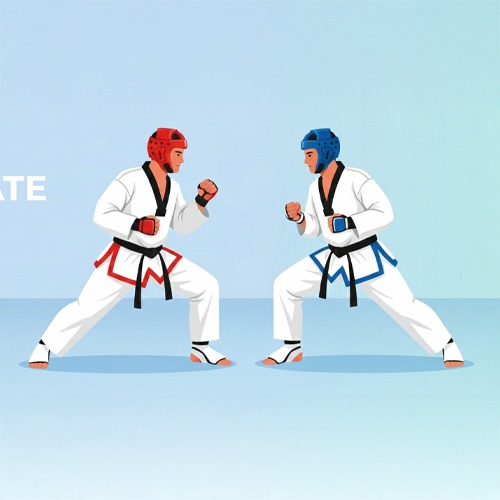
Taekwondo is one of the most dynamic and disciplined martial arts in the world, known for its high kicks, speed, and precision. Originating from South Korea, Taekwondo has grown into a globally recognized Olympic sport, inspiring millions of athletes with its philosophy of respect, self-control, and perseverance.

In India, Taekwondo is steadily gaining popularity, especially among young athletes. The country has produced talented players who have represented India at international competitions, showcasing skill and determination. The journey of these athletes—from local training centers to global arenas—is a true reflection of dedication and hard work.

Taekwondo is not just about fighting; it is a complete physical and mental workout. It improves flexibility, strength, speed, and balance. More importantly, it builds confidence, discipline, and self-defense skills. For many, Taekwondo becomes a way of life, teaching values that go beyond the sport.

However, despite its growing reach, Taekwondo in India still faces several challenges. Many players struggle with limited access to proper training facilities, experienced coaches, and financial support. Awareness about the sport is still developing, and professional opportunities are not as widespread as in other mainstream sports. Talented athletes often find it difficult to continue due to a lack of sponsorship and structured career pathways.

Let us come together to share ideas to overcome these challenges and promote Taekwondo as a strong and sustainable sport in our districts.

Reference Sites

Food for Thought

  • Can we invite national and international Taekwondo athletes to start local leagues and training camps?
  • How can we improve access to quality coaching and training facilities at the district level?
  • Can we establish Taekwondo academies and talent incubation centers in local sports complexes?
  • What steps can be taken to provide financial support and sponsorships to athletes?
  • How can we increase awareness about government schemes that support martial arts like Taekwondo?

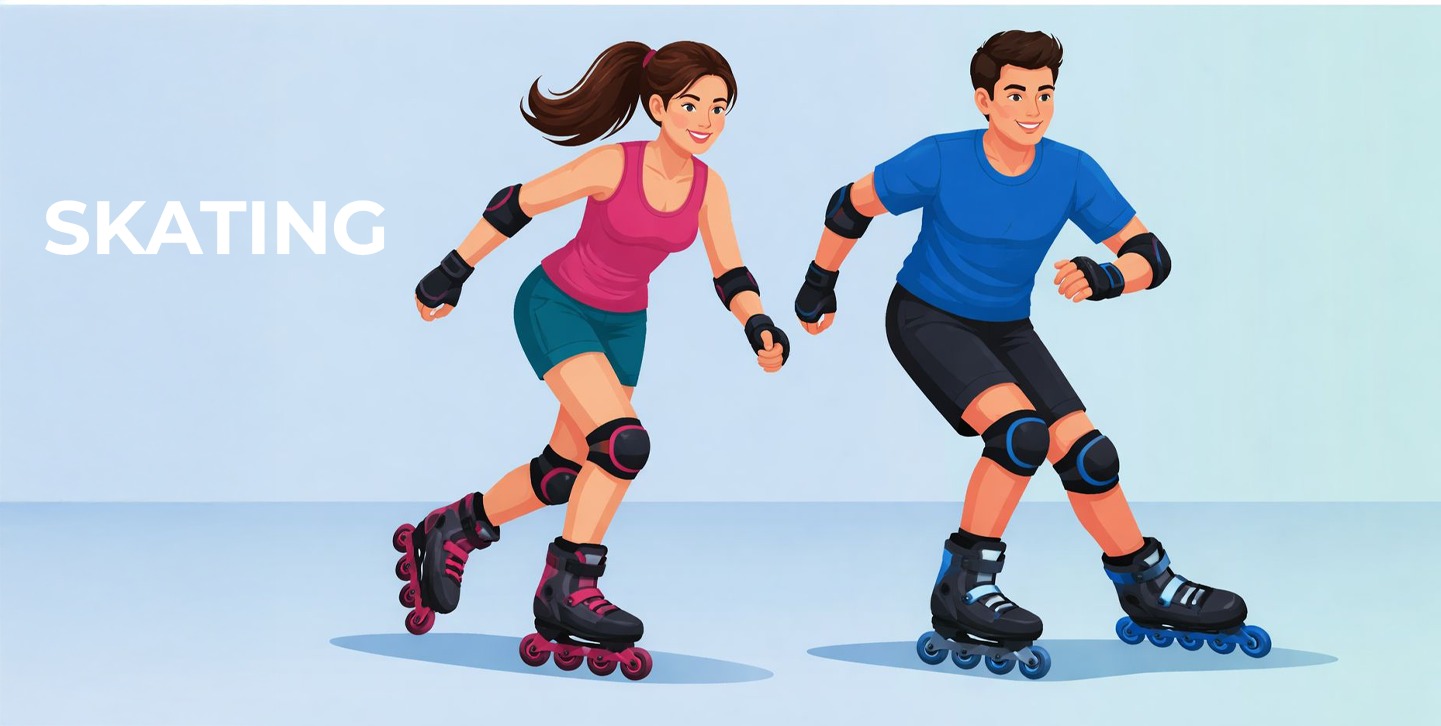
Skating is one of the most exciting and fast-growing sports in India, combining speed, balance, and precision. From smooth indoor rinks to open grounds in local neighborhoods, skating is quickly becoming a favorite among young athletes across the country.

In recent years, India has produced talented skaters who have made their mark at national and international levels. Athletes like Anup Kumar Yama have shown that with dedication and the right support, Indian skaters can compete with the best in the world. The journey of these athletes—starting from small practice areas to competing on global platforms—is truly inspiring.

Skating is not just fun—it offers amazing health benefits too. It improves balance, coordination, flexibility, and overall body strength. It’s also a great cardio workout that keeps the body active and the mind refreshed. Skating builds confidence, focus, and discipline, especially among young learners.

However, despite its growing popularity, skating still faces several challenges in India. Many aspiring skaters lack access to proper rinks, quality coaching, and financial support. Professional opportunities are limited, and there is still less awareness compared to mainstream sports. Many talented players struggle to continue due to high equipment costs and limited sponsorships.

Let us come together to share ideas to overcome these challenges and promote skating as a strong and sustainable sport in our districts.

Reference Sites: https://rsfi.in/

Sports empowerment is a mission driven initiative designed to strengthen sports from grassroots level to national excellence by creating sports culture in every home in India. 

Through these focused programs, we enable individuals, communities, and organizations to play an active role in shaping the next generation of athletes. 

Sport/s provide a unique identity to an individual, community or organization – locally, nationally and even globally. Sports have the power to transform lives, uplift economies and unite people across all backgrounds. 

Playing one or many sports brings lifelong benefits. We aim to create awareness about personal and community benefits of playing one or many games 

  1. Physical Strength – sports help build a healthy, energetic and attractive physique 
  1. Social Impact – Sports bring people together. They create excitement, positivity, and a sense of belonging within the community. A sporting community is always active, cheerful, and connected. 
  1. Economic Growth -When taken seriously, sports open doors to multiple income opportunities to boost local economy.  
  1. Personal – Sports offers more than just medals.   They offer careers. From government jobs to private sector roles, sports unlock over 20+ professional pathways for passionate individuals. 
  1. Mental Strength – Sports teach resilience—how to handle victory with humility and loss with courage. They build confidence, discipline, and a strong personality ready to face life’s challenges. 

Whether you choose to support a single athlete, a specific sport, or an entire taluka or region, your involvement becomes a powerful force for change. Every contribution – big or small – helps build a stronger everlasting sports ecosystem. 

To truly strengthen sports at the grassroots, we must focus on development at the taluka level—where most young talent lives, learns, and dreams. In the topics  below, we will explore how you can participate in this transformative journey and help shape the future of sports in your region. 

Together, we can turn local passion into national excellence.  

Together, we can build champions. 

National Sports Awards are India’s highest prestigious honors conferred annually by the President of India at the Rashtrapati Bhavan, typically on Aug 29 to mark National Sports Day. Organised by Ministry of Youth Affairs and Sports to recognize outstanding achievements in athletics and coaching. 

Major National Sports Awards of India: 

  • Major Dhyan Chand Khel Ratna Award: India’s highest sporting honor for spectacular and outstanding performances over a four-year period. 
  • Reward: ₹25 lakh, a medallion, and a certificate. 
  • Arjuna Award: Recognizes consistent outstanding performance for four years coupled with qualities of leadership and sportsmanship. 
  • Reward: ₹15 lakh, a bronze statuette of Arjuna, and a certificate. 
  • Dronacharya Award: India’s highest award for coaches who have enabled athletes to excel in prestigious major international events. 
  • Categories: Regular (recent accomplishments) and Lifetime (long-term contribution). 
  • Reward: ₹15 lakh (Lifetime) or ₹10 lakh (Regular), plus a bronze statue of Dronacharya. 
  • Major Dhyan Chand Award for Lifetime Achievement: Honors individuals who have contributed to the promotion of sport even after retirement. 
  • Reward: ₹10 lakh and a Dhyan Chand statuette. 
  • Rashtriya Khel Protsahan Puraskar: Recognizes corporate entities, sports boards, and NGOs for their role in development and promoting sports. 
  • Maulana Abul Kalam Azad (MAKA) Trophy: Awarded to universities for top performance in inter-university tournaments. 

Let us discuss and understand more about each one of these National Sports Awards in detail in the following topics. Please share your experience, thoughts, and suggestions with the sports community and let us motivate our next generation. 

Please visit following URL and contact local department of sports for more information. 

Sports Awards | Ministry of Youth Affairs and Sports | Government of India 

If you have latest status, additional information, experience or suggestions for this scheme then please add comments below in the respective topic with more information. 

Disclaimer – The information provided here is sourced from official government websites and is intended for general reference only. We will continue to consult relevant authorities and qualified professionals and update this page as new information becomes available.